
Replace Missing Teeth Without Compromising Adjacent Structure
Dental implant placement and restoration in Valley Cottage, New York
If you've lost one or more teeth and want a replacement that doesn't rely on the teeth next to it for support, dental implants offer a permanent solution rooted directly into your jawbone. In Valley Cottage, where patients often weigh the trade-offs between bridges and removable dentures, implants stand out because they restore chewing function without altering healthy neighboring teeth. You brush and floss around them just as you would a natural tooth, and they don't shift or require adhesive.
At Gabrielle Dental, the process begins with 3D CBCT imaging to assess bone density and map the exact placement path. Digitally guided planning allows the implant to be positioned with precision, supporting long-term stability and reducing the risk of complications. Once the implant integrates with your bone, a custom restoration is designed using digital impressions and a CAD/CAM workflow, which means better fit and more natural contours. For patients replacing multiple teeth, implants can also serve as anchors for dentures or be incorporated into a full restorative treatment plan.
If you're ready to explore whether dental implants are the right fit for your situation in Valley Cottage, reach out to schedule a consultation and imaging evaluation.
Our Services
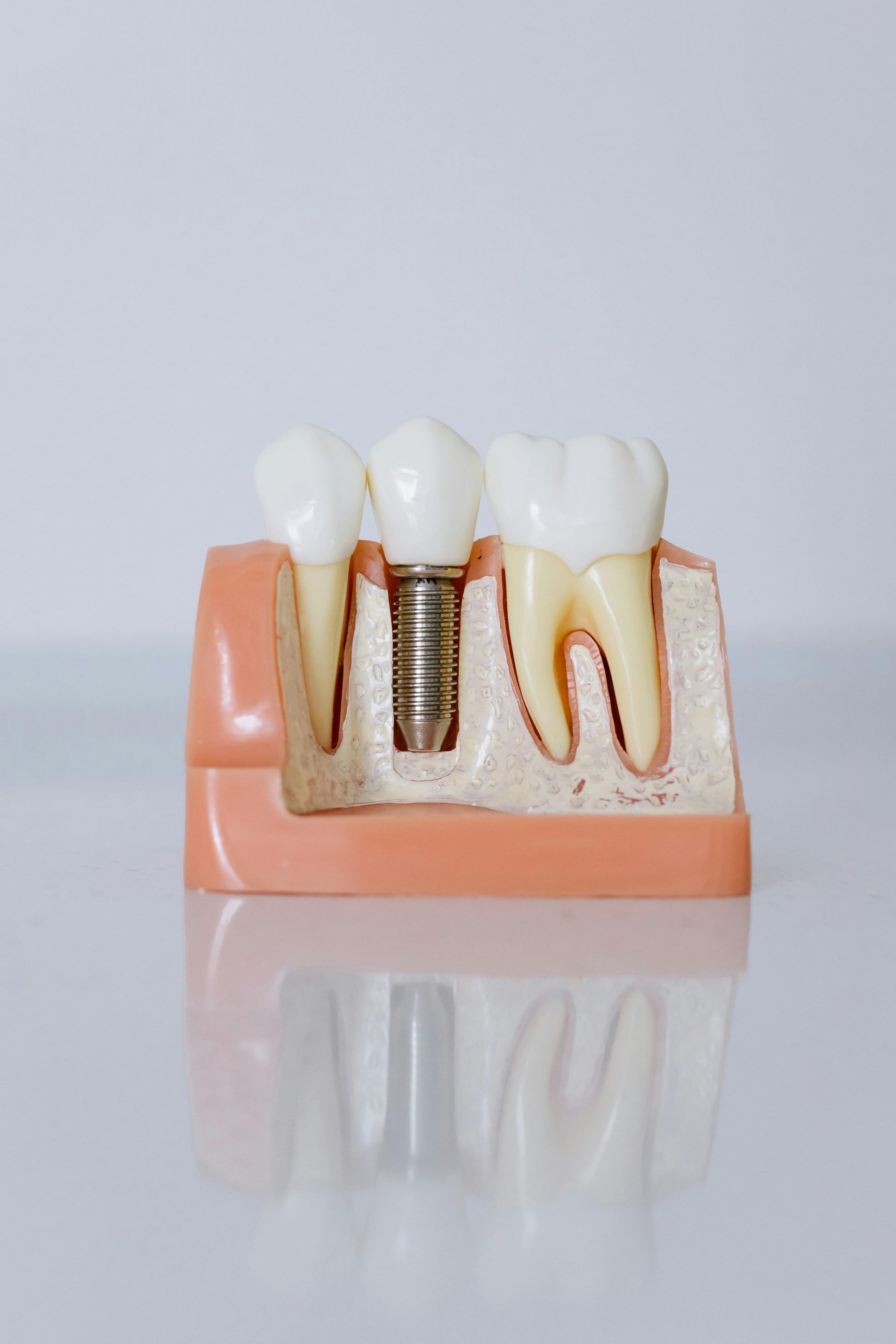
How the implant is planned and placed
You'll first undergo a cone beam CT scan, which captures a three-dimensional view of your jawbone, sinuses, and nerve pathways. This scan is used to identify the optimal angle and depth for the implant post. In Valley Cottage, Gabrielle Dental uses this data to create a digital surgical guide that ensures the implant is positioned exactly where it needs to be for both function and future crown placement.
After the implant is placed, it fuses with your bone over the course of several months in a process called osseointegration. Once that integration is complete, you'll notice the implant feels stable when you bite down, and the custom crown or bridge attached to it blends seamlessly with your surrounding teeth in both color and shape. The result is a tooth that doesn't move, doesn't require special cleaning solutions, and performs like the tooth it replaced.
The entire process spans multiple visits, and healing time varies based on bone quality and overall health. If bone grafting is needed to improve density, that adds time to the treatment timeline. Implants are not suitable for every case, particularly if untreated periodontal disease or uncontrolled diabetes is present, so a thorough evaluation is required before moving forward.
You probably have a few questions before committing
Dental implants are a significant investment in both time and cost, so it's normal to want clarity on what the process actually involves and whether you're a candidate before scheduling anything.
Dental implants at Gabrielle Dental are planned using digital guides and placed with attention to bone structure and bite alignment, so the final restoration functions as part of your natural dentition. If you're considering implants and want to understand what your specific case would involve, contact the office in Valley Cottage to schedule an evaluation and imaging appointment.